Welcome to Asterisk Online Shopping Store !
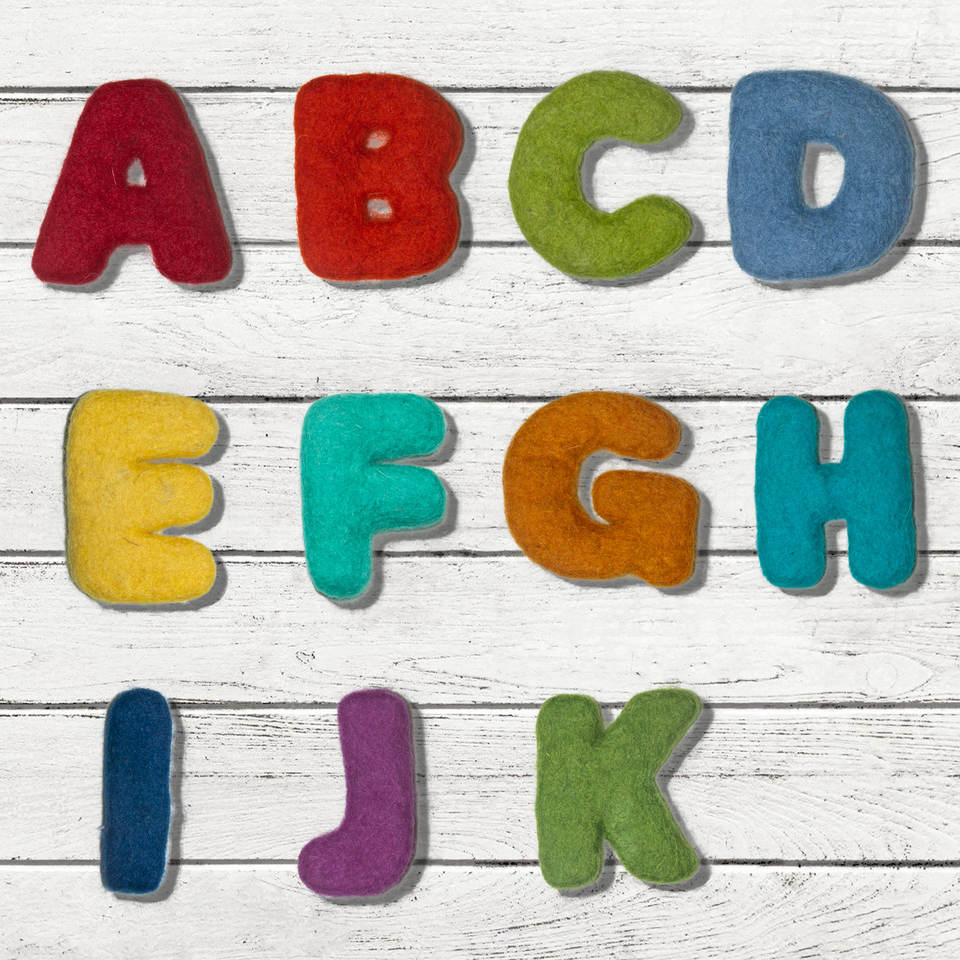
Most preschool classrooms now have tablets. Interactive whiteboards. Letter tracing apps that make encouraging sounds when kids get it right. But walk into a Montessori room and you'll usually find a basket of felt letters on a low shelf, slightly rumpled from being handled all morning. Sometimes they're scattered on a rug where someone was building words. Felt alphabets are simple: individual letters cut from wool or synthetic felt. Some sets include numbers and punctuation. The decent ones are thick enough that a three-year-old can actually grab them. The cheap ones start falling apart by October. They've been around forever. Your grandmother's kindergarten teacher might have had a set. They keep showing up in classrooms because they work not in flashy ways, but in ways that stick. There's something about handling an actual letter that's different from swiping through an app. Feeling the curve of a C. The straight edges of an I. It registers differently.
For early literacy and number sense, Felt still does things a screen can't.
Before children can recognize letters visually, they build understanding through touch. A four-year-old tracing the outline of a B with her finger is doing something different than looking at a B on a screen. She's encoding the shape through movement and pressure. Neuroscientists call this "haptic memory." Teachers call it "muscle memory for letters." Tactile alphabet letters give kids a physical reference point. The letter M has two bumps at the top. You can feel them. The letter O is a closed circle. Your finger goes all the way around. These aren't abstract concepts when you're holding the actual shape. This matters more than you'd think. Studies on handwriting acquisition show that children who trace physical letters before they write them develop better letter recognition than kids who only practice on screens. The resistance of the material whether it's sandpaper, foam, or felt provides feedback that a smooth screen doesn't.
Pick up a felt letter. Flip it over. It's backwards. Flip it again. Line it up next to another letter. Move it closer. Nudge it into place. That's pincer grip, hand-eye coordination, and spatial reasoning happening all at once. Every time a child picks up and positions a felt letter, those muscles and neural pathways are working. You don't get that from dragging a digital letter with one finger. The slight friction of felt against a flannel board or table surface requires actual motor control. A screen is too frictionless. Teachers I've talked to say this shows up most clearly with kids who have motor delays. A child who struggles with pencil grip can still successfully manipulate felt letters. The larger size and forgiving material let them practice sequencing and word-building before their hands are ready for writing.
Maria Montessori designed her sandpaper letters letters cut from sandpaper mounted on smooth boards—around the idea that children learn best when they can see, touch, and trace at the same time. Her materials are still used in Montessori schools worldwide. Felt alphabets work on the same principle, just less abrasive. Sandpaper is great for tracing but rough for small hands to hold all day. Felt provides enough texture to be interesting without being scratchy. In Montessori philosophy, the hand is the instrument of the mind. Children build understanding by physically manipulating objects. When a child lays out felt letters to spell her name, she's not copying from memory—she's constructing meaning through physical arrangement.
Here's where theory meets Tuesday morning. You have twenty minutes before specials, three kids who already know their letters, five who are still working on letter sounds, and two who can't sit still. What do you actually do with a bin of felt letters?
Write uppercase letters on index cards. Scatter lowercase felt letters on the rug. Kids match them up. This works because it's self-checking. The letter matches or it doesn't. No teacher confirmation needed. Kids can work independently or in pairs. A variation that gets more mileage: put the felt letters in a cloth bag. Kids pull one out without looking, identify it by touch, then find the matching card. This adds a sensory guessing component that makes it feel like a game instead of a worksheet. For kids who need more challenge, switch to word-building. Give them a simple CVC word card (cat, dog, sun) and have them build it with felt letters. The physical manipulation slows down the process just enough that they notice each sound.
Attach a paper clip to each felt letter. Make a "fishing rod" from a stick, string, and a magnet. Kids fish for letters in a basket or sensory bin. When they catch a letter, they say its name or sound. If they're working on phonics, they think of a word that starts with that letter. This activity has staying power because it combines movement, surprise (which letter will I catch?), and a clear goal. It also works well for kids who struggle to sit at a table. They can stand, crouch, or kneel while fishing. I've seen teachers add themed variations. Fill the bin with blue paper scraps for an ocean theme. Hide letters in a tub of dry beans for a garden theme. Use fall leaves in October. The core activity stays the same, but the context keeps it from feeling repetitive.
This one requires an alphabet felt board a flannel board or piece of felt-covered cardboard. Some teachers use the side of a filing cabinet with a piece of felt taped to it. Kids arrange felt letters on the board to retell a story, label a picture, or build simple sentences. Because the letters stick to the board (felt clings to felt), they stay in place without glue or tape. The advantage over writing on paper: no permanence. A child can rearrange letters without erasing or starting over. This lowers the stakes. Mistakes are easy to fix, so kids are more willing to try. One kindergarten teacher I know uses this for morning message. She writes a simple sentence on chart paper, then kids recreate it on the felt board using interactive felt letters. They're not copying passively; they're actively building the message letter by letter.
Every kid wants to spell their own name. It's the first word most children learn to write. Start by giving each child the felt letters they need to spell their name. (Pre-sort them into baggies if you have time.) Kids arrange them in order, using a name card as a reference. As they get comfortable, remove the name card. Can they spell it from memory? Can they identify which letter comes first? Last? For kids who need extension, add classmates' names. "Can you build Maya's name? What letter is different from yours?"
This activity has built-in differentiation. A child with a three-letter name gets practice with fewer letters. A child with a longer name gets more sequencing practice. Everyone succeeds at their level.
If you're on a tight budget, you can cut felt alphabets yourself. Buy felt sheets, print letter templates, trace, and cut.
This takes time. Figure 2-3 hours to cut a complete uppercase and lowercase set by hand. If you have a cutting machine (Cricut, Silhouette), it's faster, but you still need to weed the excess felt and separate the letters.
The main issue with DIY: consistency. Hand-cut letters won't be exactly uniform. Some Bs will be slightly larger than others. For most classroom purposes, this doesn't matter. But if you're using the letters for size-sorting activities or building precise word walls, the variation becomes a problem.
Durability is hit or miss. Felt sheets from craft stores are thin about 1-2mm. They curl at the edges, especially if kids are rough with them. After a few months of use, the letters start looking shabby.
That said, if you teach older elementary students who just need felt letters for occasional projects, DIY can work fine. The letters don't need to survive daily handling by toddlers.
Thickness matters. Good felt letter sets use felt that's at least 3mm thick. The letters hold their shape. They don't flop or curl. They're substantial enough that kids can feel the difference between similar letters (like b and d).
Check the edges. Cleanly cut edges last longer than rough or frayed ones. Laser-cut or die-cut felt has smooth, sealed edges that resist fraying. Scissors-cut felt—especially from cheap sets—starts falling apart within weeks.
Material: wool felt vs. synthetic felt. Wool felt is softer, holds up better, and feels nicer to touch. It's also more expensive. Acrylic or polyester felt is cheaper and washable, but it doesn't have the same texture. For classroom use, either works. For therapeutic settings (occupational therapy, special education), wool felt is worth the cost.
Size: most felt alphabet sets come in 2-inch or 3-inch heights. Smaller letters work better for word-building on a table. Larger letters are easier for toddlers to grasp and better for felt board displays. If you can only buy one set, go with 2.5-inch letters—a decent middle ground.
Non-toxic materials: this should be a given, but check anyway. Some cheap imported felt contains formaldehyde or azo dyes. If the set doesn't explicitly say "non-toxic" or "safe for children," skip it.
Storage: does the set come with a container? Felt letters dumped loose in a bin become a tangled mess. Sets that include a storage box or labeled bags save you hours of sorting.
A decent set of reusable felt letters should last several school years. Unlike paper or laminated letters, felt doesn't rip or peel. If a letter gets dirty, spot-clean it or throw the set in a mesh bag and wash on gentle. This makes them cheap over time. A $30 set that lasts three years costs $10 per year less than most workbooks that get tossed in June. Preschool felt alphabets fill a specific window in early literacy. They're too simple for kids who are already reading. They're not systematic enough to replace a phonics program. But for the stage when children are just starting to connect sounds with symbols, they're about right. The letters move with the child's thinking. Rearrange them. Try combinations. Make mistakes and fix them without having to erase anything. That's how early learning works—through trying things out. Felt alphabets aren't magical. They're just well designed for how young children learn. Tactile when kids need tactile. Flexible when kids need to experiment. Simple enough that the tool doesn't get in the way.
If you're setting up a pre-K or kindergarten classroom, or working on early literacy at home, a set of felt letters is one of those things that keeps being useful. Not every day. Not for every kid. But enough that you'll be glad they're within reach when you need them.
Searching for High Quality Felt Alphabets: Asterisk Nepal Felt Alphabets Collection
